Testamentary Trusts After the Proposed Trust Tax Changes: What You Need to Know
Australia’s proposed changes to discretionary trust taxation have raised questions for families preparing or reviewing their estate plans. One question is whether a testamentary trust should still form part of a will. For many families, a testamentary trust remains worth considering. However, the proposal has evolved since the initial Budget announcement, and understanding the proposed...
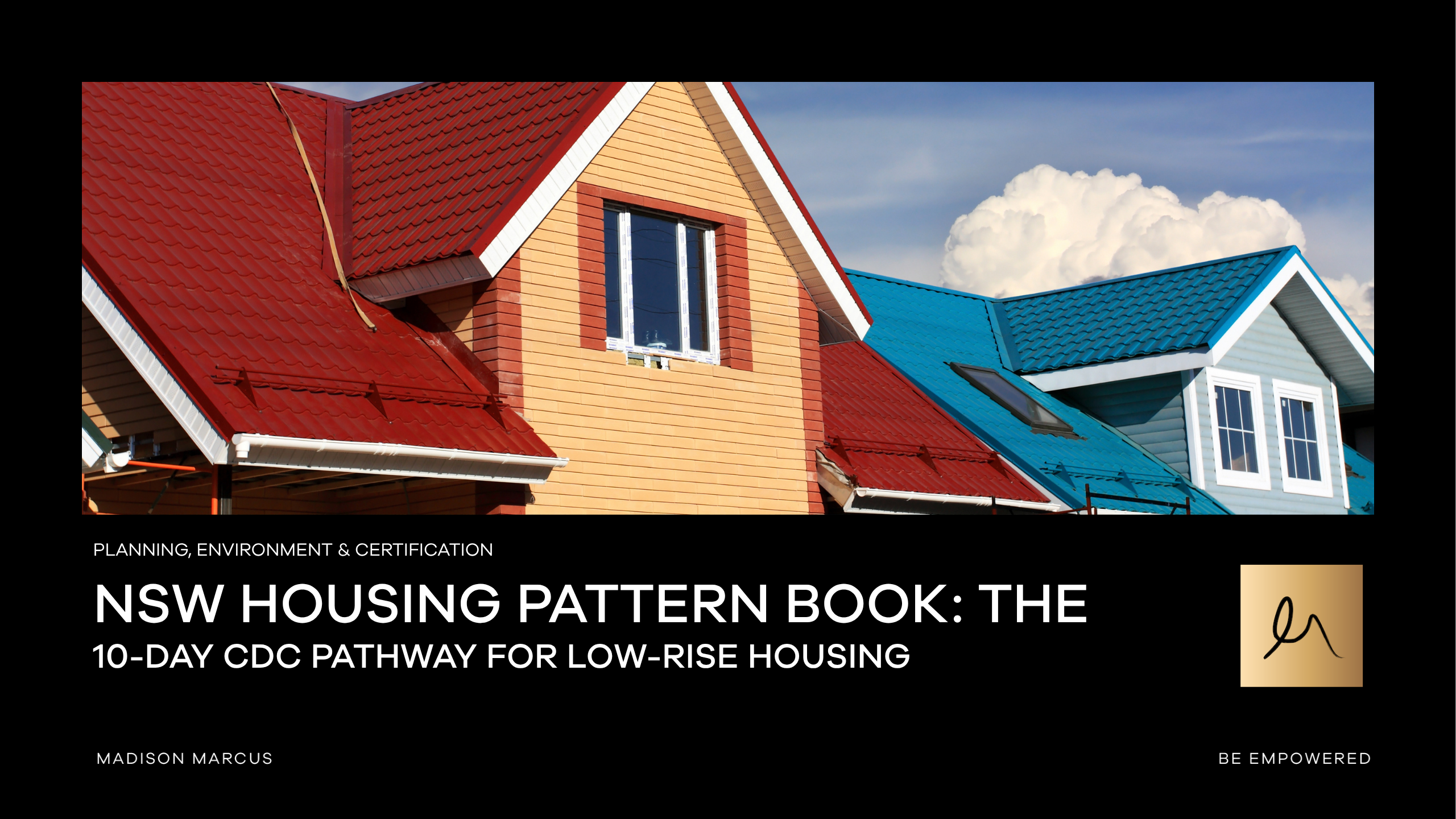
NSW Housing Pattern Book: The 10-Day CDC Pathway for Low-Rise Housing
The NSW Housing Pattern Book has introduced a new pathway for eligible low-rise residential development, allowing certain projects using approved Pattern Book designs to obtain a Complying Development Certificate (CDC)...
Family Law Orders Aren’t Optional: What Happens When Someone Does Not Comply?
A court order is not a suggestion. But when a former partner misses a payment, refuses to transfer property or does not follow parenting arrangements, the correct next step is...
NSW Retirement Village Law and Commonwealth Aged Care Law: How the Regimes Differ and Operate Together
By Gorkem Oksuz and Brad Marland 1. Scope and trigger of each regime NSW retirement-village law. The Retirement Villages Act 1999 (NSW), together with the Retirement Villages Regulation 2025, creates...
Financial & Property Settlements After Separation: What You Need to Know
When a marriage or de facto relationship ends, one of the most important issues to resolve is how to divide property, debts, and financial responsibilities. This process, known as a...
One Rulebook for Retail Leasing? Treasury Consults on Harmonising Australia’s Retail Tenancy Laws
Australia’s retail leasing framework may be heading towards its most significant structural reform in decades. A new Australian Government, consultation is examining whether the eight state and territory retail tenancy...
When a Sister’s Promise Becomes a Legal Contract: Mills v Dodds
Sometimes the most heartfelt promises, especially from loved ones facing their final days, can echo beyond the grave. In a rare but powerful testament to the enforceability of heartfelt commitments,...
Testamentary Trusts After the Proposed Trust Tax Changes: What You Need to Know
Australia’s proposed changes to discretionary trust taxation have raised questions for families preparing or reviewing their estate plans. One question is whether a testamentary trust should still form part of...
NSW Housing Pattern Book: The 10-Day CDC Pathway for Low-Rise Housing
The NSW Housing Pattern Book has introduced a new pathway for eligible low-rise residential development, allowing certain projects using approved Pattern Book designs to obtain a Complying Development Certificate (CDC)...
Family Law Orders Aren’t Optional: What Happens When Someone Does Not Comply?
A court order is not a suggestion. But when a former partner misses a payment, refuses to transfer property or does not follow parenting arrangements, the correct next step is...
NSW Retirement Village Law and Commonwealth Aged Care Law: How the Regimes Differ and Operate Together
By Gorkem Oksuz and Brad Marland 1. Scope and trigger of each regime NSW retirement-village law. The Retirement Villages Act 1999 (NSW), together with the Retirement Villages Regulation 2025, creates...
Financial & Property Settlements After Separation: What You Need to Know
When a marriage or de facto relationship ends, one of the most important issues to resolve is how to divide property, debts, and financial responsibilities. This process, known as a...
One Rulebook for Retail Leasing? Treasury Consults on Harmonising Australia’s Retail Tenancy Laws
Australia’s retail leasing framework may be heading towards its most significant structural reform in decades. A new Australian Government, consultation is examining whether the eight state and territory retail tenancy...
At Madison Marcus, we use cookies to provide you with the best browsing experience possible. These cookies help us understand how you use our site and personalise content for you. By clicking "Accept," you agree to the use of all cookies. You can change your preferences or withdraw your consent anytime. For more details, please read our Cookie Policy under our Privacy Policy.
You can revoke your consent any time using the Revoke consent button.