
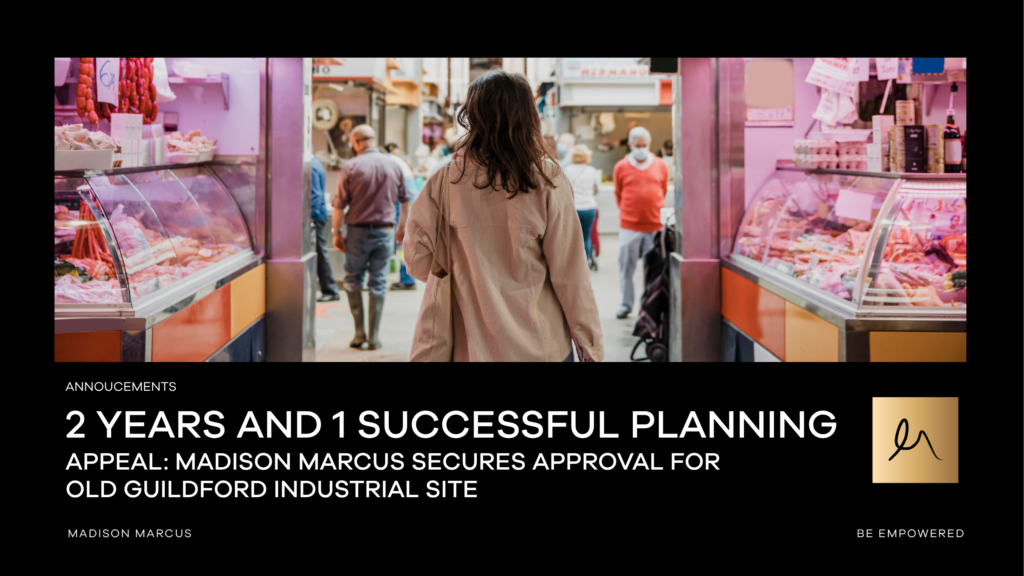
Madison Marcus has secured a successful outcome in the NSW Land and Environment Court for clients seeking development approval for an industrial site in Old Guildford.
Following two years of work, four conciliations and a three-day hearing, the Court upheld the appeal in Konstanopoulos v Fairfield City Council [2026] NSWLEC 1662. On 6 October 2026, it granted consent to the amended development application, subject to conditions.
Led by partner Paul Vergotis, the matter required sustained advocacy, detailed expert evidence and practical changes to address concerns about how the site would operate.
A complex site with competing operational demands
The application concerned two existing warehouses at 23–31 Fairfield Street, Old Guildford. It sought approval for bottled water production, a neighbourhood shop, an industrial retail outlet and local distribution premises, together with land consolidation and a right of way.
Fairfield City Council had refused the application. Central to the dispute were concerns about loading arrangements, vehicle movements and pedestrian safety, particularly the interaction between forklifts, trucks and people using the shared driveway.
The challenge was to demonstrate that the proposed uses could operate safely and efficiently within the constraints of an established industrial site.
Building a practical path to approval
Through expert conferencing and amendments to the proposal, many of the Council’s objections were resolved before the Court reached its final determination.
Further changes during the hearing addressed the remaining traffic and safety concerns. These included restricting forklift movements to the interiors of the warehouses, revising loading arrangements and strengthening pedestrian protection through bollards, marked walkways and a separate pedestrian entrance.
The revised operating arrangements also provided for goods to be transferred between the warehouses by truck during a specified early-morning period.
The Court accepted that the amended proposal and conditions of consent would deliver significant improvements to traffic management and pedestrian safety. It found that the remaining concerns had been satisfactorily addressed.
Evidence supported a flexible approach
An important issue was whether departures from certain development control plan standards should prevent approval.
The Court accepted that the relevant provisions should be applied flexibly where reasonable alternative solutions achieved their objectives. This required evidence showing how the proposed arrangements would work in practice.
For example, although a strict application of the parking rates produced a requirement for 95 spaces, the traffic experts agreed that the proposed 47 spaces would meet the expected demand for the particular operations.
The judgment illustrates the value of detailed, site-specific evidence in demonstrating that a proposal can achieve acceptable planning outcomes despite departures from numerical controls.
Approval without the proposed trial period
The Court also declined to impose the Council’s proposed 12-month trial period.
It accepted the applicants’ argument that the restriction was neither reasonable nor necessary, particularly given the internal fit-out works and external safety improvements required by the proposal. The Court found that the amended application and enforceable consent conditions adequately addressed the concerns raised.
The approval remains subject to conditions governing the authorised uses, operating arrangements and required works. The Court also ordered the applicants to pay the Council’s costs thrown away as a result of amendments to the application.
Persistence backed by preparation
Reflecting on the outcome, Madison Marcus partner Paul Vergotis said:
“After two years of work, four conciliations and a three-day hearing, this is a significant result for our clients. Securing approval required us to work through the detail, respond to the expert evidence and demonstrate how the site could operate safely. The outcome reflects the value of persistence, careful preparation and practical solutions.”
For property owners and businesses facing a refused development application, the case demonstrates how a carefully developed appeal can create a path forward. Understanding the operational issues, assembling the right evidence and refining the proposal can be central to achieving consent.
Madison Marcus assists clients with development applications, planning disputes and Land and Environment Court appeals. Contact our Planning and Environment partners, Paul Vergotis and Michael Mantei to discuss your planning and development matter.

Michael Mantei: Partner, Planning, Environment & Certification
Michael Mantei is the Head of Madison Marcus’ Planning, Environment & Certification Division and an Accredited Specialist in Local Government and Planning Law. With more than 20 years of experience and a background in local government planning, he advises clients on planning, environmental, certification and development matters. Michael is recognised for delivering practical, commercially focused solutions across complex regulatory and dispute matters.

Paul Vergotis: Partner, Planning, Environment & Certification
Paul is an Accredited Specialist in Planning & Environment Law and Partner at Madison Marcus, with over 30 years’ experience across legal practice and town planning. He is a leading adviser on development, regulatory approvals and Land and Environment Court litigation, known for delivering practical, commercially focused outcomes on complex planning and infrastructure matters.