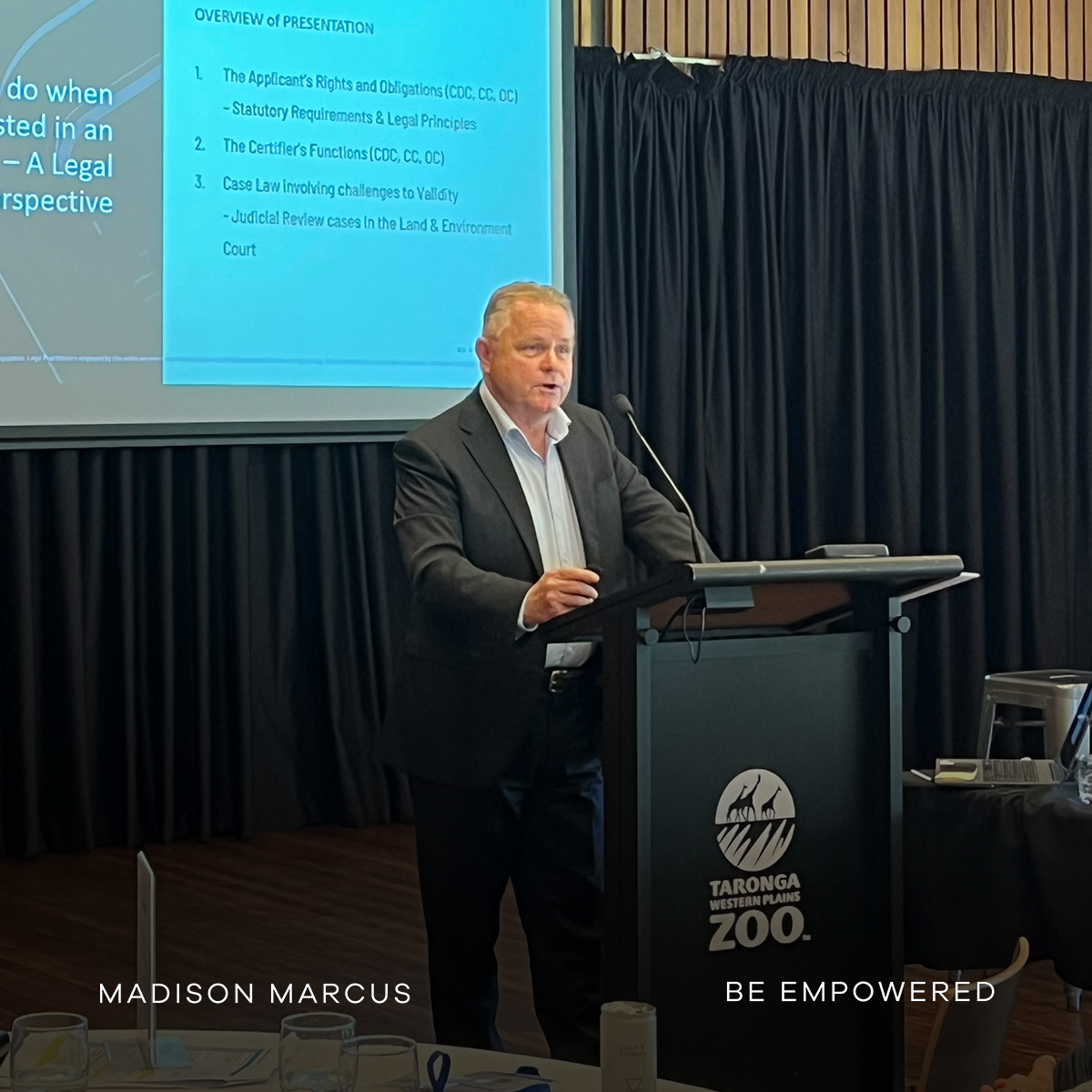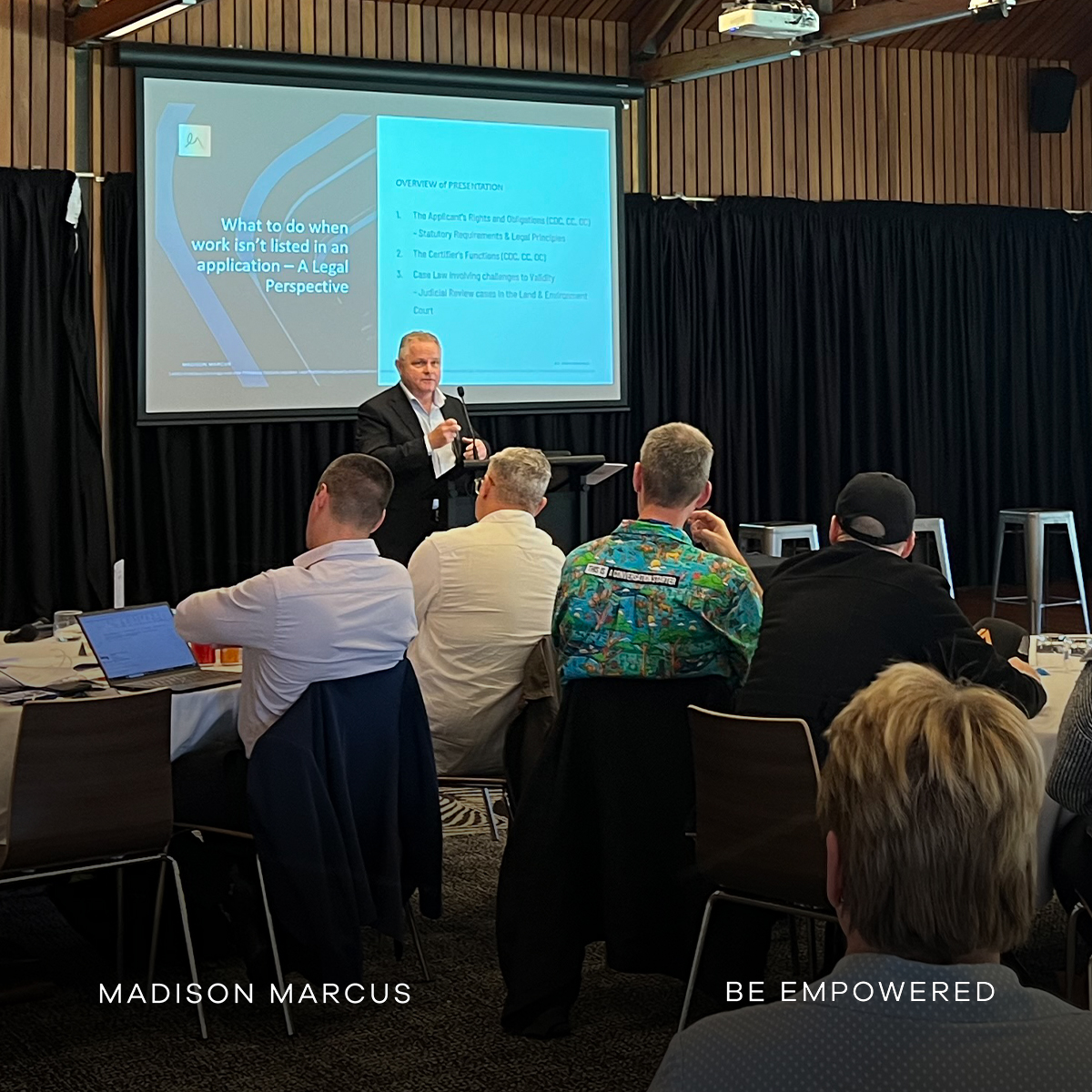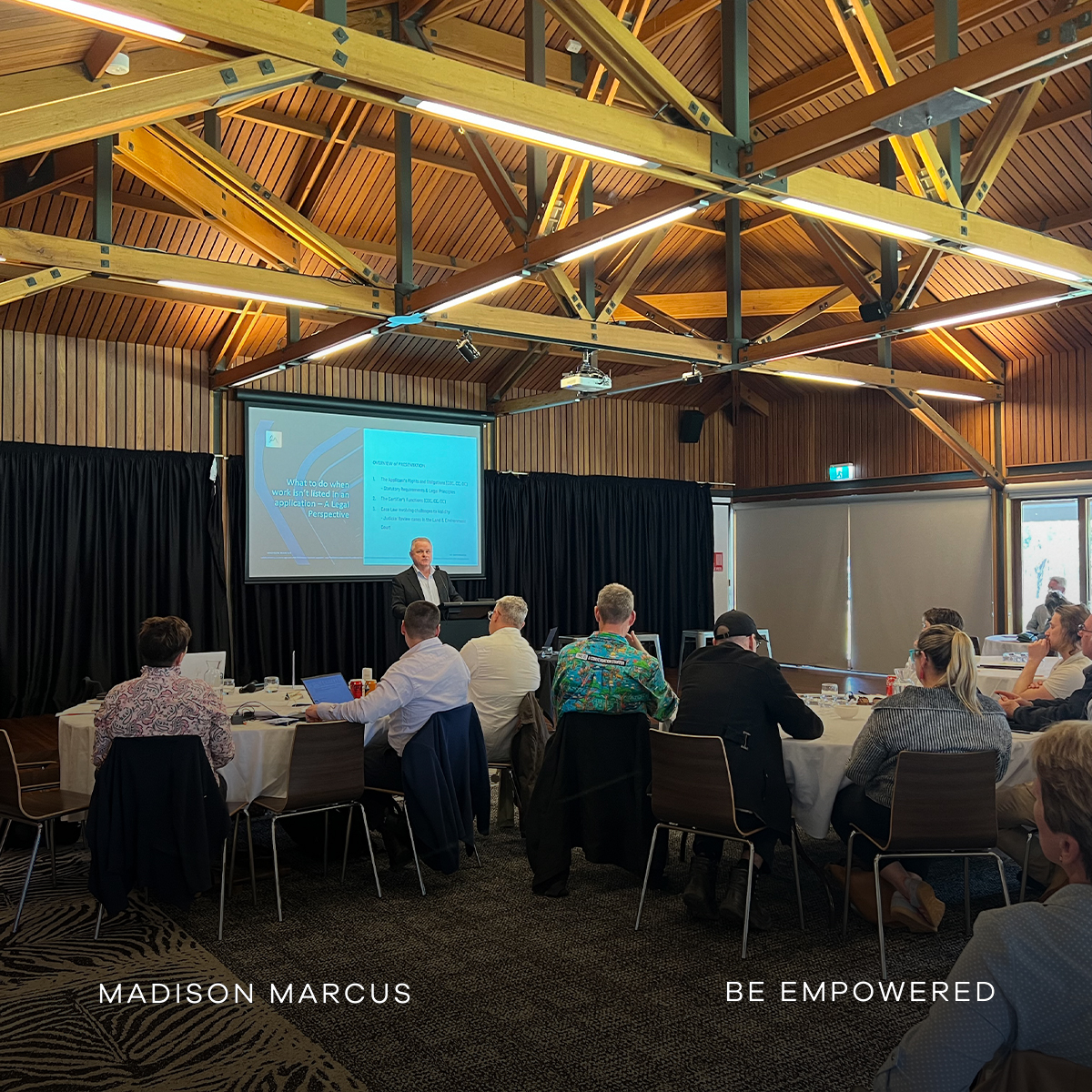


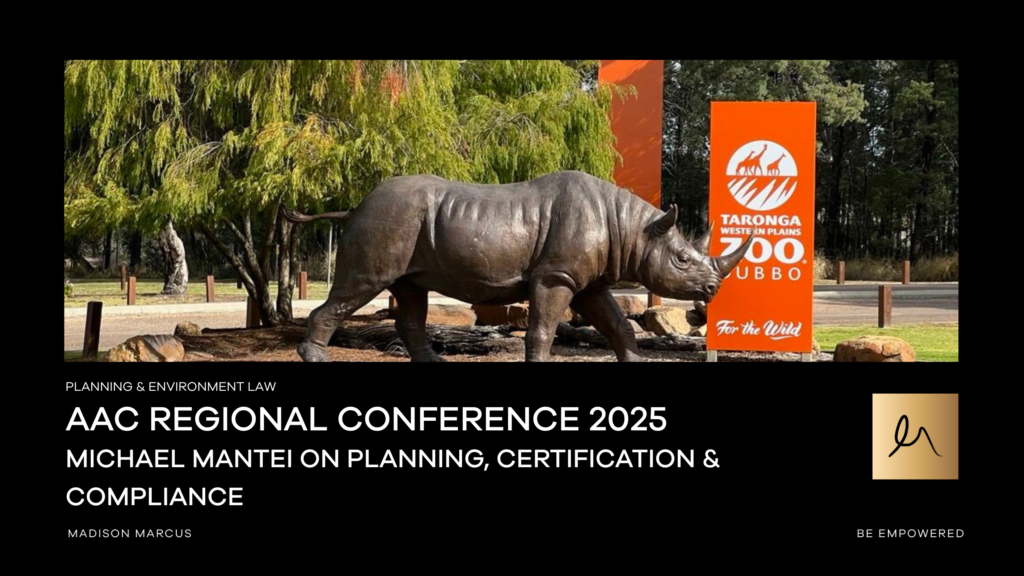
On 4 September 2025, industry professionals from across Australia gathered in Dubbo for the AAC Regional Conference: Certifiers on Safari, held at Taronga Western Plains Zoo. The conference was hosted by the Association of Australian Certifiers and brought together certifiers, consultants and legal practitioners to examine current challenges in certification and compliance.
One of the key sessions was “What to Do When Work Isn’t Listed in an Application – A Legal Perspective”, presented by Michael Mantei, Partner at Madison Marcus and Accredited Specialist in Local Government and Planning Law.
Addressing a Common Certification Challenge
Certifiers regularly face difficulties when building work on site does not match the scope described in a complying development certificate, construction certificate or occupation certificate application.
During the session, Mantei examined this issue from a legal perspective. He explained the statutory framework governing certification and clarified the limits of a certifier’s powers when assessing applications that contain omissions, gaps or unclear information.
Key Themes Covered at the Conference
Mantei’s presentation focused on practical issues that certifiers encounter in daily practice. In particular, it addressed:
-
The rights and obligations of applicants when lodging Complying Development Certificate (CDC), Construction Certificate (CC) and Occupation Certificate (OC) applications
-
The functions and powers of certifiers, including when they may request further information
-
The difference between mandatory and discretionary obligations under certification law
-
How courts assess the validity of applications and certificates at the time of determination
-
Lessons drawn from recent NSW Land and Environment Court decisions
These issues continue to gain importance as certification law evolves, particularly in the area of complying development and professional standards.
Insights from Recent Case Law
The presentation also reviewed judicial decisions from the NSW Land and Environment Court. These cases show how disputes arise when approval documents do not clearly define the scope of work.
Importantly, the cases demonstrate that:
-
An application does not become invalid simply because information is missing at lodgement
-
The application itself defines the scope of the approval
-
Multiple approvals can apply to the same site or building when they operate consistently
By understanding these principles, certifiers can better manage legal risk and make defensible decisions.
Download the Conference Paper
Readers who would like further detail can access the full conference paper.
Download the conference paper below: “What to Do When Work Isn’t Listed in an Application – A Legal Perspective”
The paper provides a detailed analysis of the legislation, certifier powers and case law discussed during the conference.
Speak With Our Planning, Environment & Government Lawyers
If you would like to discuss the issues raised in the paper, including certification risk, incomplete applications or compliance challenges, or if you have a matter that requires legal guidance, please get in touch.
You can contact Michael Mantei or Paul Vergotis to arrange a confidential discussion.
Both regularly advise certifiers, developers and industry professionals on planning, certification and regulatory compliance matters.