

By Sofia Saad
When someone dies, identifying their estate may seem straightforward: check what was registered in their name and include it in the asset pool.
But legal ownership and beneficial ownership are not always the same thing.
A recent NSW Supreme Court decision shows that property registered almost entirely in a deceased person’s name may still belong beneficially to someone else.
What happened in Reissis v Xafellis?
In Reissis v Xafellis [2026] NSWSC 1262, an adult daughter applied for further provision from her late mother’s estate under the Succession Act 2006 (NSW).
The daughter had significant financial and personal needs and was responsible for three children.
The principal apparent asset was the proceeds from the sale of a unit in Padstow. The unit had been registered:
- 99% in the deceased’s name; and
- 1% in the deceased’s mother’s name.
At first glance, this suggested that almost all the sale proceeds formed part of the deceased’s estate.
The deceased’s parents disagreed. They argued that they had funded the purchase of the unit and most of its expenses, and that their daughter had held her registered interest for their benefit.
Who really owned the property?
The Court found that the deceased’s parents had paid the full purchase price.
The unit had been acquired to provide accommodation for their daughter, who was experiencing health difficulties. The evidence was that the parents intended to retain the beneficial interest in the property as part of their retirement savings.
The unusual 99%–1% ownership structure had been adopted for land-tax reasons. It was not evidence that the parents intended to give 99% of the property to their daughter.
The Court therefore found that the deceased had held her interest on a resulting trust for her parents.
In practical terms, this meant that the registered title did not reflect the true beneficial ownership of the unit.
What is a resulting trust?
A resulting trust may arise where one person pays the purchase price for property but title is placed in another person’s name.
The law may presume that the registered owner holds the property for the person who provided the purchase money, unless the evidence shows that a gift was intended.
Where a parent places property in an adult child’s name, a competing presumption known as the “presumption of advancement” may suggest that the parent intended to make a gift.
However, that presumption can be rebutted by evidence showing that no gift was intended.
The Court examines the parties’ intention at the time of the purchase, including:
- who supplied the purchase price;
- why the property was acquired;
- how the ownership structure was chosen;
- who paid the mortgage and other expenses;
- statements made at the time; and
- contemporaneous financial, legal and taxation records.
Later statements about what someone supposedly intended may carry less weight than documents and conduct from the time of the transaction.
What happened to the family-provision claim?
The Court granted the daughter permission to bring her family-provision claim after the applicable time limit.
However, her substantive claim was dismissed.
The decisive issue was not simply whether she was an eligible person or whether she had financial need. Once the Court found that the unit proceeds belonged beneficially to the deceased’s parents, those proceeds were not available as estate property from which provision could be made.
The Court observed that, if the proceeds had been available, it would have made provision of $200,000 to be held on trust for the daughter.
That was a hypothetical assessment only. The daughter was not awarded $200,000 because the relevant proceeds did not belong to the estate.
Why does this matter for family-provision claims?
A family-provision claim is not decided only by examining the claimant’s relationship with the deceased and their financial needs.
Before considering what provision should be made, it may be necessary to determine what property actually belongs to the estate.
An estate inventory, title search or bank balance can identify legal ownership, but it may not resolve competing beneficial interests.
This can significantly affect:
- whether there is an estate from which provision can be made;
- the value of the estate available for distribution;
- negotiations between claimants and beneficiaries;
- whether third parties should be joined to the proceedings; and
- whether a separate trust or equitable claim must be determined.
Lessons for families who help purchase property
Informal family property arrangements can create serious problems after death.
If parents contribute money towards a child’s property, the family should document whether the payment is intended to be:
- a gift;
- a loan;
- the purchase of a beneficial interest;
- an advance on an inheritance; or
- financial assistance without any ownership rights.
Useful records may include a loan agreement, deed of trust, written acknowledgement, bank records, taxation advice and correspondence created when the property is purchased.
Relying upon an unwritten family understanding can lead to expensive litigation years later.
Lessons for executors and claimants
Executors should not assume that every asset registered in the deceased’s name belongs beneficially to the estate.
Where another person claims an interest, the executor should obtain evidence about:
- the source of the purchase funds;
- mortgage and expense payments;
- any loan or trust documents;
- the purpose of the transaction;
- taxation and financial advice; and
- statements or correspondence created at the time.
Likewise, a person considering a family-provision claim should investigate the estate’s true beneficial ownership before forming expectations about the available asset pool.
The bottom line
The name on title is important, but it may not provide the complete answer.
Reissis v Xafellis demonstrates that evidence about who paid for property and what was intended at the time of purchase can determine whether an asset belongs to a deceased estate at all.
The Madison Marcus Wills & Estates team can assist with family-provision claims, disputed estate assets and questions involving trusts or informal family property arrangements.
This article provides general information only and is not legal advice. Whether a trust exists depends upon the evidence and circumstances of the particular transaction.
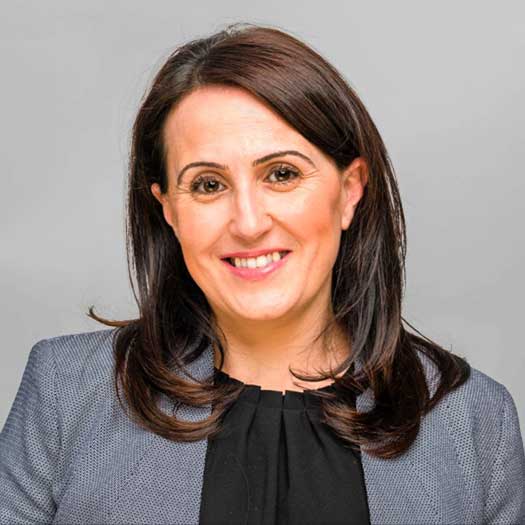
Theresa Armstrong: Director, Family Law
Theresa Armstrong is a Director at Madison Marcus, an Accredited Specialist in Personal Injury Law and Head of the firm’s Parramatta practice. With over 20 years of legal experience, her practice spans family law, wills and estates, employment law and insurance litigation.
Theresa is recognised for her strategic approach to litigation, strong negotiation skills and commitment to achieving cost-effective outcomes. She combines practical legal advice with a compassionate, client-focused approach and is a dedicated mentor and advocate for access to justice.