

Online will templates can appear quick, inexpensive and straightforward.
The difficulty is that a document may look like a proper will, and may even be correctly signed, while still leaving serious questions about what its words actually mean.
A recent NSW Supreme Court decision demonstrates how a few uncertain words in a home-made will can lead to litigation over a multimillion-dollar estate.
What happened in The Estate of Wade?
In The Estate of Wade [2026] NSWSC 1225, the deceased asked his nephew, a retired schoolteacher, to prepare a new will.
The nephew used a template found online.
The will made gifts to the deceased’s children and left the remainder of an estate worth approximately $3.8 million to his daughter, Dianne. If Dianne did not survive him, the remainder would instead pass to the nephew.
Under the nephew’s name appeared the words:
“FOR THE PURPOSE OF – Providing the most appropriate care for my loving wife.”
The deceased’s wife died before him. After his death, disagreement arose about what those words meant.
The multimillion-dollar question
The Court was required to consider whether:
- Dianne received the remainder of the estate outright;
- her gift was restricted by the stated purpose of caring for her mother; or
- the gift had failed, causing the remainder to be divided under the rules of intestacy.
The Court decided that Dianne received the remainder outright.
The statement about providing care applied to the alternative gift to the nephew if Dianne did not survive. It did not restrict Dianne’s gift.
Although that was the result, obtaining it required Supreme Court proceedings.
Why did the wording cause so much uncertainty?
The location and formatting of the care provision were central to the competing interpretations.
It was argued that the bold capitals showed that the provision qualified the entire gift of the remainder. The Court found that the formatting had been used inconsistently and had largely come from the online template.
Formatting alone could not reliably establish what the deceased intended.
The case shows why apparently simple expressions such as “for the purpose of”, “on condition that” or “to look after” can create difficult legal questions.
Depending on the wording and context, they might:
- explain why a gift has been made;
- express a non-binding wish;
- impose a binding condition;
- create a trust for another person; or
- cause a gift to fail if the stated purpose can no longer be fulfilled.
Why didn’t the family simply explain what the deceased wanted?
The deceased could no longer clarify his intention.
The nephew who prepared the will was the only witness to the will-making process. However, computer records contradicted aspects of the drafter’s recollection, and the Court had grave doubts about the reliability of his detailed evidence.
The daughter also sought rectification of the will as an alternative argument. Rectification allows a court, in limited circumstances, to correct a will that does not accurately record the will-maker’s instructions.
The Court did not need to rectify the will because it resolved the dispute by interpreting the document. However, it indicated that the evidence would not have provided the clear and convincing proof required for rectification.
The practical lesson is that contemporaneous instructions and records will generally carry much more weight than someone attempting to reconstruct conversations years later.
What can families learn from the case?
- A signed document can still be unclear
Signing and witnessing address how a will is executed. They do not guarantee that its language produces the intended result.
- A statement of purpose must be carefully drafted
If a gift is intended to be held for another person’s care, the document should clearly identify:
- who will hold the money or property;
- who is intended to benefit;
- how and when the gift may be used;
- what happens to anything remaining; and
- what happens if the person requiring care dies first.
If the words are only intended to explain the reason for a gift, they should not accidentally resemble a legal condition or trust.
- Substitute beneficiaries require careful thought
A will should address what happens if a beneficiary dies before the will-maker.
The consequences should be considered expressly rather than left to generic template wording.
- Contemporaneous records matter
The drafting file should record:
- the instructions actually given;
- the assets and their approximate values;
- the family circumstances;
- the reasons for unequal gifts;
- earlier wills and intended changes; and
- the will-maker’s understanding of the final document.
These records may become critical if the will is later challenged or requires interpretation.
- The cost of obtaining certainty after death can be substantial
A professionally prepared will cannot prevent every dispute. However, clear drafting and reliable records can reduce the risk of an estate having to fund litigation simply to determine what the will means.
In Wade, costs orders were made from the estate. Those costs ultimately reduce the property available for distribution to beneficiaries.
Are online wills always invalid?
No.
A will is not automatically invalid because it was prepared online or without a solicitor. A home-made will may satisfy the formal requirements and operate as intended.
The risk is that a standard template cannot necessarily identify ambiguity, conflicting provisions or problems arising from the will-maker’s particular family and financial circumstances.
The more valuable or complicated the estate, the greater the potential consequences if the wording is unclear.
The bottom line
A cheap will can become very expensive if a court is later required to determine what it means.
The Madison Marcus Wills & Estates team can assist with professionally prepared wills, testamentary trusts, succession planning and the interpretation or rectification of disputed wills.
This article provides general information only and is not legal advice. The validity and meaning of a will depend upon its wording, execution and surrounding circumstances.
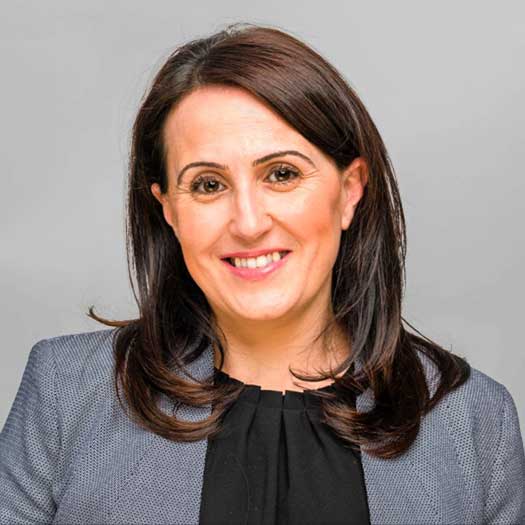
Theresa Armstrong: Director, Family Law
Theresa Armstrong is a Director at Madison Marcus, an Accredited Specialist in Personal Injury Law and Head of the firm’s Parramatta practice. With over 20 years of legal experience, her practice spans family law, wills and estates, employment law and insurance litigation.
Theresa is recognised for her strategic approach to litigation, strong negotiation skills and commitment to achieving cost-effective outcomes. She combines practical legal advice with a compassionate, client-focused approach and is a dedicated mentor and advocate for access to justice.