
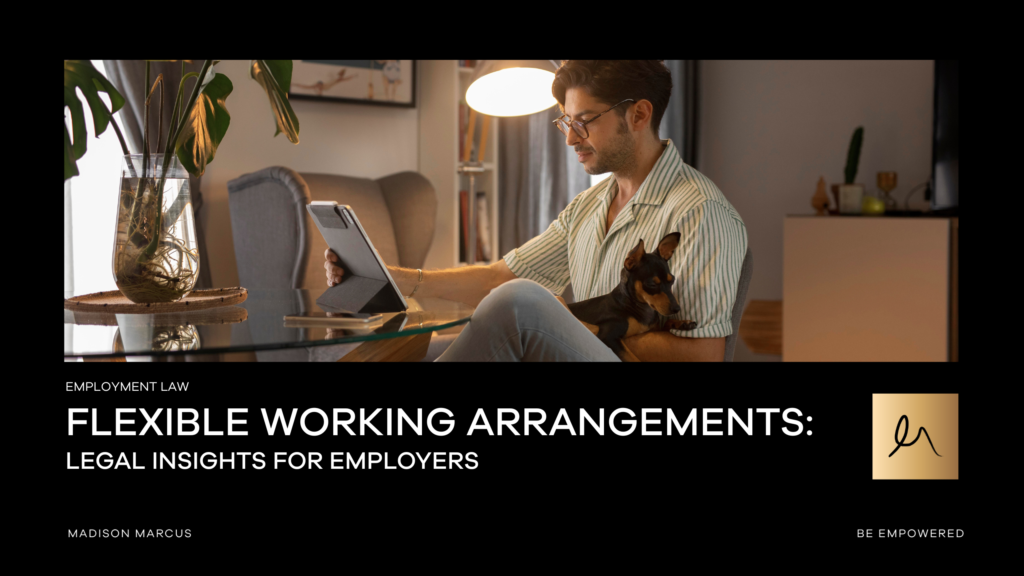
Questions about workforce flexibility are among the most common raised by our clients.
Flexible work has become a significant and evolving area within Australian employment law.
In this article, we explore the growth of flexible working rights within the National Employment Standards¹ (NES). We also explore the NES’ legislative history, its purpose and how it governs flexible work arrangements for eligible employees.
The National Employment Standards (NES): A Brief Overview
What are the National Employment Standards?
The National Employment Standards are a set of 11 minimum employment entitlements that apply to employees covered by the Fair Work Act 2009² (Cth) (FWA) under Australian law.
They are set out in Part 2-2 of the Fair Work Act.
The Australian Parliament introduced these standards as part of the Fair Work Bill 2008³, by then-Deputy Prime Minister and Minister for Employment and Workplace Relations, Julia Gillard, on November 25, 2008. Gillard’s speech highlighted the NES intention for a clear, fair, and enforceable set of minimum employment conditions for all employees covered by the federal workplace relations system.
Minister Gillard described the NES as the cornerstone of fair work in Australia, maintaining equity within the employment system. The NES were created in response to the WorkChoices legislation that had previously dismantled many employee protections.
Importantly, the NES applies to all employees covered by the national workplace relations system, regardless of the award or agreement under which they work.
The Evolution of the NES
Amendments to the Fair Work Act have reflected the changing needs of Australia’s evolving workforce needs and shifting societal values. These updates have included provisions for family and domestic violence leave, parental leave, and flexible working arrangements, signalling a growing recognition of diverse employee needs and the importance of fostering inclusive workplaces.
History of Flexible Working Under the NES
Origins of Flexible Work Rights in Australian Labor Law
Flexible working arrangements under the NES commenced in 2010 alongside the Fair Work Act 2009 (Cth). The reforms responded to the evolving needs of Australia’s workforce, particularly employees balancing work and family responsibilities. At the outset, the NES limited the right to request flexible working arrangements to parents or primary carers of children under school age, as well as parents of children with disabilities under the age of 18. This framework recognised the growing demand for family-friendly workplace policies and acknowledged that rigid working hours often disadvantaged employees with caring obligations. By allowing eligible employees to request changes to their hours, work patterns or work location, the NES took an important first step toward improving work–life balance and workforce participation.
The Fair Work Amendment Act 2013⁴ significantly expanded these entitlements, broadening the scope of who could request flexible work. This now included employees with family and caregiving responsibilities, employees with disabilities, and employees facing family or domestic violence. The 2013 amendment was a pivotal moment in recognising the diverse challenges employees face in balancing their personal and professional responsibilities.
Expansion of Flexible Work Rights
A growing recognition that work–life balance is essential to workplace wellbeing and productivity has driven the evolution of flexible working rights under the NES. The NES allows an eligible employee the right to request flexible working arrangements if they meet certain criteria, including:
- Being a parent or primary carer of a child of school age or younger
- Caring for a family member with a disability
- Experiencing family or domestic violence
- Being aged 55 or older
This list of eligibility criteria highlights the need for flexibility in addressing both personal and family-related challenges in an increasingly complex society.
Types of Flexible Work Available Under the NES
Under the NES, an eligible employee is entitled to request changes to any of the following:
- Remote or Hybrid Work: The option to work from home or alternate between home and the workplace. This has become common during and after the COVID-19 pandemic.
- Adjusted Start and Finish Times: Employees may request different start or end times to accommodate caregiving or other personal obligations, such as school drop-offs or medical appointments.
- Part-Time or Job Sharing: Employees may request to reduce their hours or share a position with another employee, allowing for flexibility without significantly impacting the business.
- Compressed Work Weeks: Working longer hours over fewer days, enabling a four-day workweek, for example, while maintaining full-time status.
- Flexible Breaks: Adjusting the timing or length of breaks during the workday to support personal responsibilities.
Eligibility and Considerations Under the NES
While employees have the right to request flexible working arrangements, not all employees are eligible to make such requests.
A request for flexibility must be in writing.
According to Section 65⁵ of the NES Act, only employees who have completed at least 12 months of continuous service are eligible. Casual employees, however, must have both 12 months of continuous service and “a reasonable expectation of continuing employment” to be considered eligible.
Section 65A⁶ of the Act also sets forth specific considerations for employers when assessing flexible work requests. Employers are required to respond to these requests in writing within 21 days and can only refuse on “reasonable business grounds.” These grounds might include:
- Impact on Productivity: If flexible arrangements are likely to significantly affect an organisation’s ability to meet productivity goals, this can form a basis for refusal.
- Cost Implications: If accommodating the request would result in significant cost increases, employers may have reasonable grounds to decline.
- Customer Service and Team Cohesion: Where flexible work arrangements may hinder service delivery or disrupt teamwork, this may be deemed reasonable grounds for refusal.
These provisions aim to balance employee needs with employers’ operational requirements.
The Fair Work Amendment (Secure Jobs, Better Pay) Act 2022⁷ strengthened FWC enforcement, making employer refusal to flexible work requests without valid reasoning harder.
Conclusion:
Flexible work provisions reflect the evolving landscape in Australian employment law, balancing business needs with employee wellbeing.
The right to request flexible working arrangements, while not absolute, is a key modern employment entitlement, that reflect evolving expectations. Understanding these provisions is essential to fostering fair and compliant workplaces in a post-pandemic world.
Australia’ evolving labour market will likely see flexible work remain a central theme, shaped by legislation, case law, and shifts towards adaptable workforces.
This demand for flexibility is only going to increase. There are significant advantages for businesses working constructively to address employee demands for flexibility.
How Madison Marcus can help
Flexible work arrangements are becoming a central focus of Australian employment law. It is important for both employers and employees to understand the current legislative framework. The NES and recent reforms, including the Secure Jobs, Better Pay Act 2022, have strengthened flexible work rights and enforcement options.
At Madison Marcus, our employment law specialists help employers develop compliant and practical workplace policies. We also support employees in understanding their entitlements and negotiating arrangements that support work–life balance.
For tailored advice and practical solutions, contact Madison Marcus. Our team can guide you through the complexities of flexible work in a rapidly changing regulatory environment.
¹ Fair Work Ombudsman, National Employment Standards, available at https://www.fairwork.gov.au/employment-conditions/national-employment-standards
² Fair Work Act 2009 (Cth), available at https://www.legislation.gov.au/C2009A00028/2017-09-20/text
³ Fair Work Bill 2008 (Cth), available at https://www.legislation.gov.au/bills/C2008B00262FR_1.pdf
⁴ Fair Work Amendment Act 2013 (Cth), available at https://www.legislation.gov.au/C2013A00073/asmade
⁵Fair Work Act 2009 (Cth) s 65, available at https://classic.austlii.edu.au/au/legis/cth/consol_act/fwa2009114/s65.html
⁶ Fair Work Act 2009 (Cth) s 65A, available at: https://classic.austlii.edu.au/au/legis/cth/consol_act/fwa2009114/s65a.html
⁷ Fair Work Legislation Amendment (Secure Jobs, Better Pay) Act 2022 (Cth), available at https://www.legislation.gov.au/C2022A00079/latest/text