
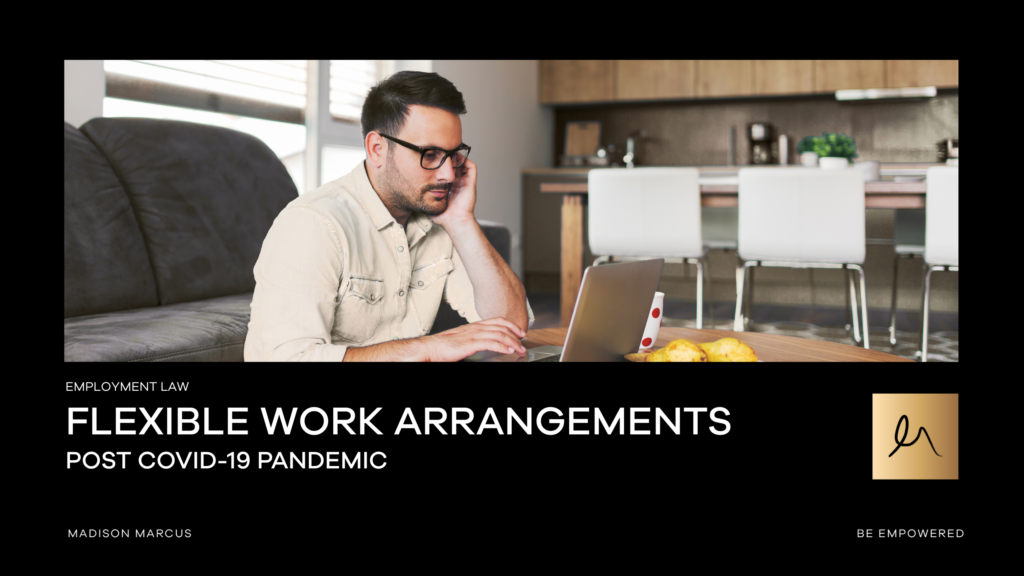
As the year unfolds, we continue to reflect on the pivotal moment that first put flexibility at the forefront of people’s thinking, the COVID‑19 pandemic.
COVID-19 fundamentally altered how we work. With governments forced to lock down their populations, an urgent and almost immediate shift toward flexible and remote working arrangements across Australia and globally changed the way businesses operated.
What began as a temporary response to lockdowns has evolved into a permanent transformation in employee expectations and employer practices. It created the concept of hybrid working.
This article explores the changes brought by COVID-19 to flexible working, the role of technology as an enabler, and how different sectors adapted to these unprecedented shifts.
The COVID-19 Impact on Work and Flexibility
COVID-19 forced many Australian businesses to immediately implement flexible working arrangements. Traditional office-based roles suddenly transformed into remote roles after organisations were left with almost no option but to establish arrangements to adhere to government-imposed lockdowns.
The concept of flexible work predated the COVID-19 outbreak, long recognised under Australia’s Fair Work Act 2009¹ (Cth) (FWA), however the scale of remote work transition during the pandemic was unprecedented.
Temporary Changes to the NES
The National Employment Standards (NES), as outlined in the Fair Work Act, give employees the right to request flexible work arrangements under specific circumstances, including caring responsibilities for those over 55 years of age. However, these requests were not always mandatory for employers to approve unless “reasonable business grounds” supported a refusal.
Temporary adjustments became necessary during COVID-19 to accommodate community wide remote work, even for employees not traditionally qualified for flexible work arrangements. For example, the Fair Work Commission (FWC) reviewed certain industries, including healthcare and education, facilitating the adoption of emergency provisions that prioritised employee and community safety over long-established workplace procedures.
A Permanent Shift in Expectations
The pandemic saw a shift in employee expectations, with many seeing remote work as the standard. Many employers have revisited the office requirements of their teams as a result, acknowledging the relationship between remote arrangements and reduced overheads, increased productivity and greater job satisfaction. This shift has contributed to an increased perception that flexible work arrangements are essential to the employment landscape, influencing the development of future workplace policies.
Technology: The Enabler of Flexible Work
The COVID-19 era saw rapid advancements in digital communication and collaboration tools, allowing employees to maintain productivity outside the office, reshaping daily operations and employee expectations.
Key Technological Advancements Supporting Flexibility
- High Speed Internet: It goes without saying that no remote platform would be effective without high-speed broadband internet. Had the pandemic occurred in, say, any time before 2008 when broadband was accessible by less than 50% of the population, the situation would have been extremely different.
- Cloud Computing: Cloud-based platforms such as Google Workspace and Microsoft Office 365 enabled employees to access files and collaborate on projects from anywhere. These platforms provide seamless document sharing, co-editing, and storage solutions, making them crucial for remote teamwork.
- Video Conferencing: Platforms like Zoom, Microsoft Teams, and Webex became household names as video meetings replaced in-person gatherings. Video conferencing not only kept meetings going but also fostered team cohesion and allowed companies to engage with clients and stakeholders remotely.
- Cybersecurity: With the rise of remote work, cybersecurity became a priority to protect sensitive information accessed outside secure office networks. Companies implemented stricter security protocols, such as virtual private networks (VPNs) and multi-factor authentication (MFA), to ensure data safety.
These advancements made it possible for many employees to work from home effectively, challenging the traditional office model and encouraging businesses to adopt more flexible long-term work policies. The reliance on digital tools also led employees to seek ongoing flexibility, creating a shift towards a hybrid work model even post-pandemic.
Shaping Employee Expectations for Long-Term Flexibility
“Work-life balance” has become a growing priority in recent years. Employees are increasingly expressing their preference for remote or hybrid models, as high in their preferences when considering their options and weighing up offers.
Technology has made it easier for employees to maintain productivity from home, leading many to advocate for long-term flexibility even as offices reopen. Employers, too, are re-evaluating their operations to integrate digital tools that support a flexible workforce.
Case Studies: Sectors Adapting to New Norms
The shift to flexible work impacted each industry differently. The shift to flexible work affected each industry differently. Unique challenges and solutions have emerged as organisations adapted to a “new normal.” Some sectors transitioned smoothly to remote work, while others faced operational limitations.
Below, we examine how the finance, healthcare, education, and retail sectors adapted to flexible working arrangements during COVID-19.
Finance
In the finance sector, flexibility was achieved primarily through remote working and virtual customer interactions. Many banks and financial institutions transitioned to online platforms, enabling employees to work from home and conduct client consultations through video calls. However, cybersecurity and data protection posed significant challenges due to the sensitive nature of financial transactions. Major financial institutions introduced strict digital security measures, including encrypted connections and secure access protocols, to safeguard customer data.
Healthcare
The healthcare sector faced unique pressures, as frontline workers could not transition to remote work. However, technology enabled flexibility in administrative roles and allowed some non-urgent consultations to move online. Telehealth, which expanded significantly during COVID-19, offered patients a safe way to access medical services remotely. This shift continues to be a vital part of healthcare service delivery post-pandemic, providing ongoing flexibility for patients and medical professionals.
Education
Educational institutions moved to online teaching platforms, using tools like Zoom and Google Classroom to continue lessons remotely. This transition posed challenges related to access to technology, student engagement, and ensuring quality education. Teachers had to adapt to new methods quickly, and schools invested in digital resources to bridge gaps. The experience has influenced schools and universities to incorporate hybrid models, combining in-person and online learning to offer more flexible education options.
We are now seeing even bigger shake ups in this area as institutions announce that they intend continuing on the trend of reducing face-to-face teaching. In September 2024, Adelaide University announced a move away from face-to-face lectures², causing some hysterical comments in the media.
Retail
The retail industry encountered difficulties transitioning to flexible work due to the hands-on nature of many roles. However, online shopping and e-commerce surged, leading to a need for flexibility in logistics and customer service positions. Many retailers set up remote customer service teams, allowing employees to work from home, while operational staff adjusted to staggered shifts to meet social distancing requirements.
Conclusion
The COVID-19 pandemic marked a turning point for flexible work in Australia, leading to widespread changes in how companies operate and how employees view work-life balance. From emergency shifts to long-term adaptations, businesses across various sectors have integrated flexible work models into their structures, supported by advancements in technology and legislative changes under the NES.
Flexible working arrangements will continue to evolve, and both employers and employees must remain aware of their rights and obligations under the Fair Work Act. We expect Australian business to keep advancing towards more flexible work environments, balancing the needs of both the workforce and operational goals.
Navigating flexible work in a post-COVID world can be complex.
If you need clarity on employee rights, employer obligations, or how to manage flexible work requests lawfully, our team can help.
Get in touch for tailored advice.
¹ Fair Work Act 2009 (Cth), available at https://www.legislation.gov.au/C2009A00028/2017-09-20/text (accessed 15 January 2026).
² Adelaide University dumps face-to-face lectures, The Guardian (13 September 2024), available at https://www.theguardian.com/australia-news/2024/sep/13/adelaide-university-dumps-face-to-face-lectures (accessed 15 January 2026).