
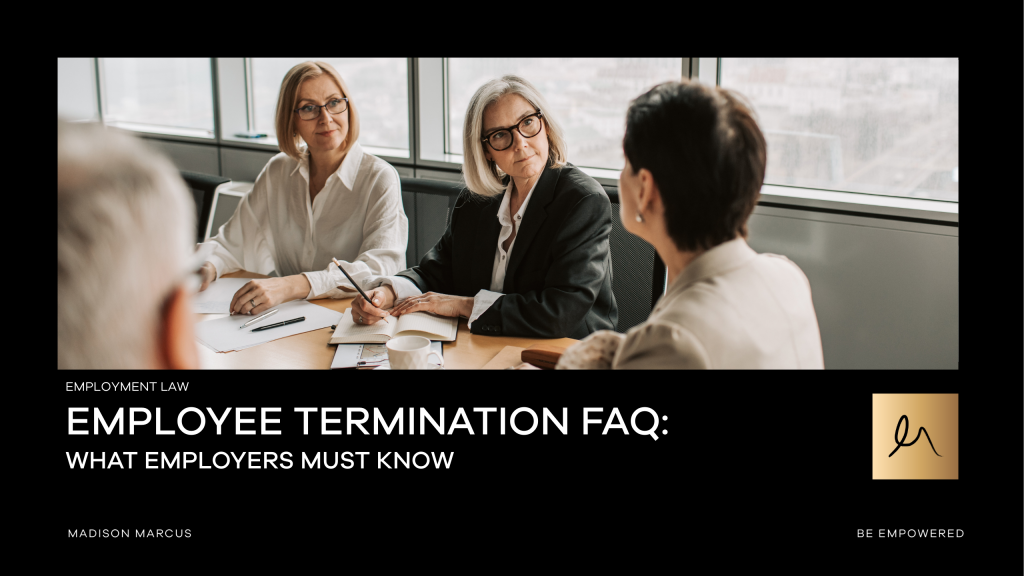
Terminating an employee is one of the highest-risk decisions an employer can make. Even where there is a genuine reason to end employment, a failure to follow the correct legal process can expose a business to unfair dismissal, adverse action, and penalty claims.
In Australia, termination of employment is governed primarily by the Fair Work Act 2009 (Cth)¹. The Act sets clear requirements around valid reasons for dismissal, procedural fairness, notice periods, and employee entitlements. Employers who overlook these obligations often discover that a lawful termination can quickly become a costly legal dispute.
This guide explains what the Fair Work Act requires when terminating an employee, including valid reasons for dismissal, procedural fairness obligations, warnings, notice requirements, and key time limits. Understanding these requirements can help employers reduce risk and ensure compliance, while also helping employees understand their rights.
Under the Fair Work Act 2009 (Cth), employers must follow a fair and lawful process when terminating employment. In particular, employers must establish a valid reason for dismissal and apply procedural fairness. Otherwise, the business may face unfair dismissal or adverse action claims.
Under Australian employment law, termination must relate to the employee’s capacity, conduct, or the operational requirements of the business.
Commonly, valid reasons include:
However, if an employer cannot establish a valid reason, the dismissal may be unfair.
Procedural fairness plays a central role in any lawful termination process. In essence, employers must give employees a genuine opportunity to respond before making a dismissal decision.
At a minimum, employers must:
Consequently, a failure to apply procedural fairness can make an otherwise valid dismissal unfair.
Generally, yes. In cases involving poor performance or minor misconduct, employers should issue warnings before termination.
Specifically, employers should:
Importantly, multiple warnings strengthen procedural fairness and significantly reduce legal risk.
A show cause notice asks the employee to explain why the employer should not terminate their employment.
Importantly, it serves two key purposes:
For this reason, employers often use show cause notices in serious misconduct or ongoing performance matters.
Yes. Employees have the right to bring a support person to disciplinary or show cause meetings.
As a result, allowing a support person promotes fairness and transparency. Conversely, refusing this right may count against the employer in an unfair dismissal claim.
Yes. Under the Fair Work Act, employers must provide written notice of termination.
Accordingly, the notice should clearly state:
If not, the employer may breach the Act and increase legal exposure.
Notice periods depend on the employee’s length of service and age.
Under the Fair Work Act, notice ranges from:
Modern awards and employment contracts may require longer notice.
Final pay must include all outstanding entitlements, such as:
Late or incomplete final pay can result in penalties and legal claims.
Employees have 21 days from the date of dismissal to lodge an unfair dismissal or adverse action claim.
The Fair Work Commission only grants extensions in exceptional circumstances.
A redundancy is genuine when:
If these steps do not occur, the redundancy may be challenged.
Summary dismissal allows immediate termination without notice for serious misconduct, such as:
Even in summary dismissal cases, employers should still apply procedural fairness where possible.
Termination decisions carry significant legal risk. A small procedural error can result in costly claims.
If you need advice on terminating an employee, managing performance issues, or responding to an unfair dismissal claim, contact our employment law team. We provide clear, practical guidance to help you get the process right from the start.
Early advice reduces risk and protects your position.
¹ Fair Work Act 2009 (Cth), available at https://www.austlii.edu.au/cgi-bin/viewdb/au/legis/cth/consol_act/fwa2009114/